
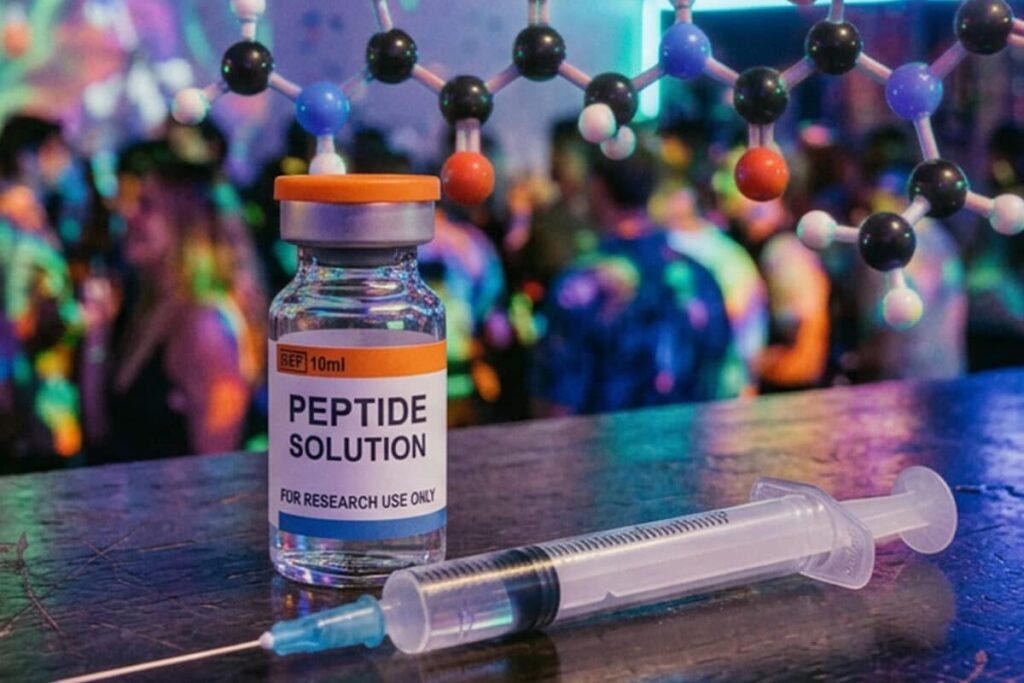
If you are new to research peptides, the online market can feel overwhelming. Product pages are full of technical terms, regulations are not always obvious, and quality varies from one seller to the next. This beginner’s guide explains the basics, the rules that apply in Australia, and how to evaluate a supplier such as Quantified Peptides before you buy.
What Are Research Peptides?
Peptides are short chains of amino acids, the building blocks of proteins. In a laboratory setting, synthetic peptides are used to study biological processes in controlled, non-living systems. Examples include receptor-binding assays, cell-culture experiments, enzyme studies, and analytical method development.
“Research peptide” has a specific meaning: a compound sold for in-vitro laboratory use only. It is not a medicine, a supplement, or a cosmetic, and it is not intended for human or animal consumption. Any seller that suggests otherwise is a red flag.
Understand the Australian Rules First
Before shopping, learn how peptides are regulated here. The Therapeutic Goods Administration (TGA) oversees therapeutic goods, and the Poisons Standard places many peptides in Schedule 4 (prescription-only) or Schedule 10 (prohibited). State and territory laws add further rules on possession and supply.
As a beginner, make it a habit to check the current scheduling of any peptide on the TGA website before ordering. If you are working within a university or company, speak to your institution’s compliance or procurement team first. If your interest is therapeutic, the lawful path is a registered medical practitioner, not a research supplier.
Key Terms You Will See on Product Pages
Purity. Usually measured by HPLC (high-performance liquid chromatography) and shown as a percentage. Higher is generally better, but ask to see the actual data.
Mass spectrometry (MS). Confirms the peptide’s identity by checking its molecular weight against the expected value.
COA (Certificate of Analysis). A batch-specific report summarising test results. Treat it as essential.
Lyophilised. Freeze-dried powder, the most common and stable format for shipping and storage.
Lot or batch number. A code that links a vial to its test results.
Net peptide content. The proportion of the powder that is actual peptide, as opposed to water and salts.
How to Judge an Online Supplier
Start with transparency. A trustworthy seller lists the peptide name, sequence or CAS number, quantity per vial, and storage guidance. It publishes clear shipping, returns, and privacy policies, and shows real business details such as an ABN and contact information.
Next, look at testing. Ask whether COAs are independent and batch-specific, or whether the same document is reused across lots. Be cautious about prices that sit far below the market, as they can signal poor quality.
Finally, check the language. Honest suppliers use research-use-only labelling and avoid claims about weight loss, muscle gain, healing, or dosing for people.
Handling and Storage Basics
When your order arrives, inspect the packaging and confirm the vial seals are intact. Store lyophilised peptides in a cool, dark place, usually refrigerated or frozen, following the supplier’s guidance. Australian summers can be harsh on parcels, so ask how products are packed and shipped. Record the lot number and keep the COA with your lab notes.
Where Quantified Peptides Fits In
Quantified Peptides presents itself as a supplier serving the Australian research community. As a beginner, use the checklist above: request the COA for the exact lot, look for HPLC and mass spectrometry data, confirm research-use-only labelling, and read the shipping and returns policies.
Final Thoughts
Starting with research peptides is mostly about asking good questions: Is it legal for my situation? Is the supplier transparent? Can they prove the quality? Take your time, keep thorough records, and never use research compounds outside their intended laboratory purpose.